
A lot of store owners think of display cases as one category, but they’re not. Different products need different types of protection, visibility, and customer interaction. Using the wrong case usually leads to one of two problems — either the product gets ignored, or staff spend all day maintaining the display.
The right setup depends on what you’re selling and where it sits in the store.
Glass Showcase Counters
These are common near checkout areas or along main walkways. They work well for smaller products customers are likely to ask about directly rather than pick up themselves.
Typical uses include:
- jewelry
- watches
- collectibles
- electronics accessories
The main advantage is controlled access. Customers can see the product clearly without everything being constantly handled.
Wall-Mounted Cases
Wall-mounted units are useful when floor space is limited. They keep products visible without adding more fixtures into walkways.
These work well for:
- featured items
- limited inventory pieces
- higher-value products
- decorative merchandise
They’re also good for stores that want cleaner sightlines since they don’t crowd the middle of the floor.
Freestanding Floor Cases
These are more flexible because they can define sections within the store. A freestanding case can break up large open areas without making the layout feel closed off.
They’re commonly used in:
- gift stores
- hobby shops
- sports merchandise stores
- specialty retail environments
The key is spacing. If too many are grouped together, customers stop noticing individual displays.
Cases for Memorabilia and Awards
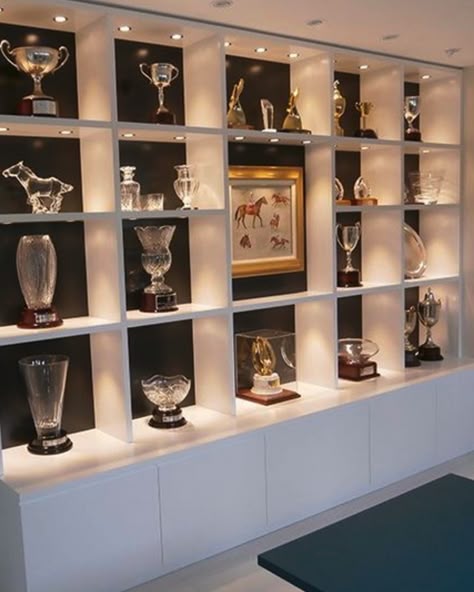
Some stores sell products tied to sports, schools, events, or recognition items. In those environments, trophy display cases make sense because they’re built to showcase items that customers naturally want to view from multiple angles.
These displays are less about bulk inventory and more about presentation. Lighting and spacing matter more here than quantity.
Stores selling collectibles or custom awards often use these cases to create focal points rather than standard product shelving.
Countertop Display Cases
Smaller countertop cases work best for add-on products or impulse items near checkout. They don’t need much space, but they can still pull attention if kept organized.
The mistake most stores make is overcrowding them. Once too many products are packed inside, customers stop looking.
A few clearly visible items almost always outperform a cluttered setup.
Locking Security Cases
For higher-value merchandise, locking cases are often necessary. But there’s a balance — if customers feel like every product is difficult to access, they engage less.
Good locking cases still allow:
- strong visibility
- easy lighting
- quick staff access
If staff struggle to open or reset them, the system slows down daily operations.
Open vs Closed Displays
Not everything belongs behind glass.
Products customers benefit from touching or testing should usually stay accessible. Cases are better for:
- fragile items
- expensive products
- collectibles
- products needing cleaner presentation
Mixing open fixtures with enclosed displays usually creates a better overall balance across the store.
What This Comes Down To
Display cases shouldn’t just “hold products.” They should match the way customers interact with those products.
Some items need protection. Some need visibility. Others need flexibility or accessibility. When the case fits the product properly, the store feels easier to shop and easier to manage at the same time.